Brief an AI model to draft a short sales email built on a real reason to write, an approved proof point and a single ask, and check it for accuracy and basic compliance.
Why AI sales emails sound the same
Most people who receive sales email can spot an AI draft in the first line. "I hope this email finds you well." "I came across your company and was impressed by your innovative approach." "I'd love to explore how we can help you achieve your goals." None of these sentences is wrong. They are simply what a model writes when it has nothing specific to say.
The usual response is to ask the model to "personalize" the email. That rarely helps, because personalization without facts turns into flattery: a compliment on the prospect's website, a guess about their challenges, a mention of their industry. The reader can tell the sender knows nothing real about them.
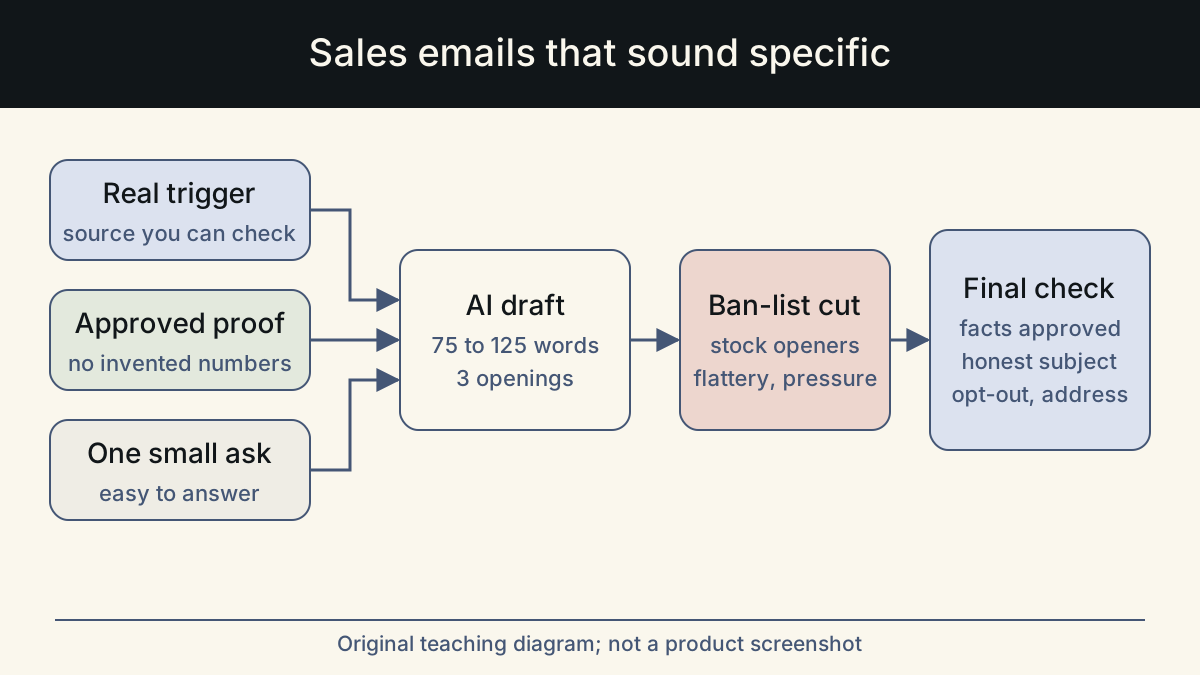
The fix is to change the inputs, not the adjectives in the prompt. A specific email needs three specific things: a real reason to write now, one proof point you are allowed to use, and one small ask.
The three inputs that make an email specific
Collect these before you open any AI tool. If you cannot fill all three, the email is not ready to write, and no prompt will rescue it.
Keep a short note of where each input came from. Triggers go stale quickly: a job posting may close and a launch may be months old by the time a sequence reaches the last name on the list.
- A real trigger: something that happened at the prospect's company that connects to what you sell. A job posting for a role your product supports, a public product launch, a new office, a post by the person you are writing to. Write down the source, so you can check it before sending.
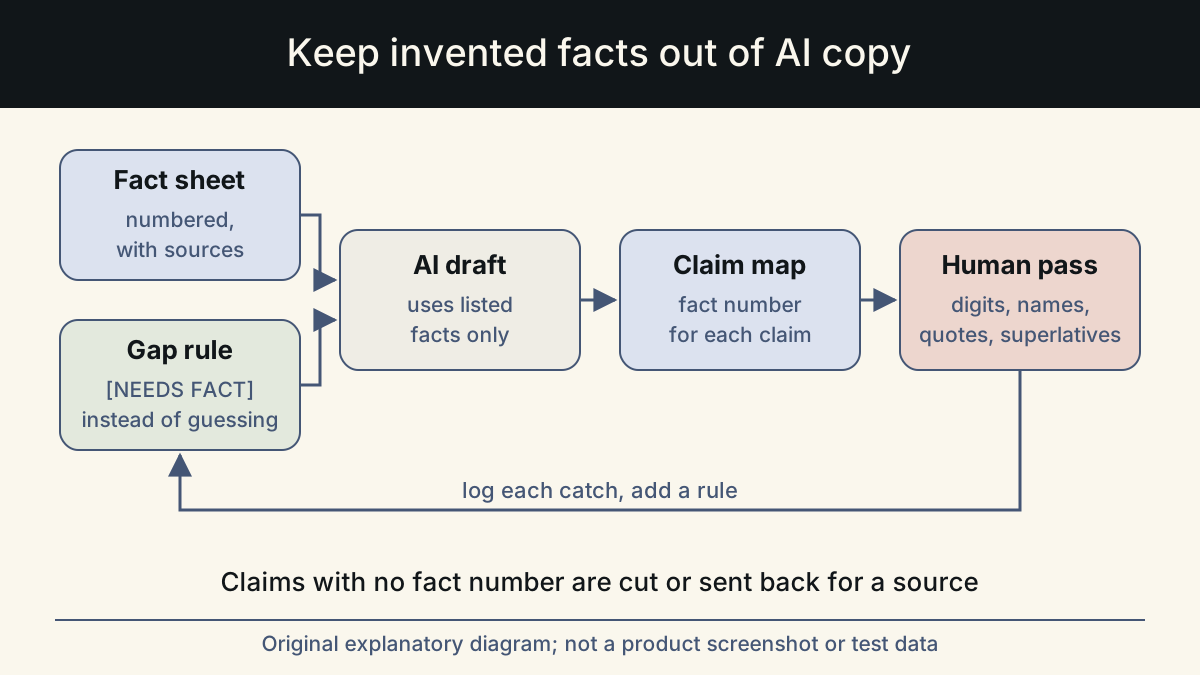
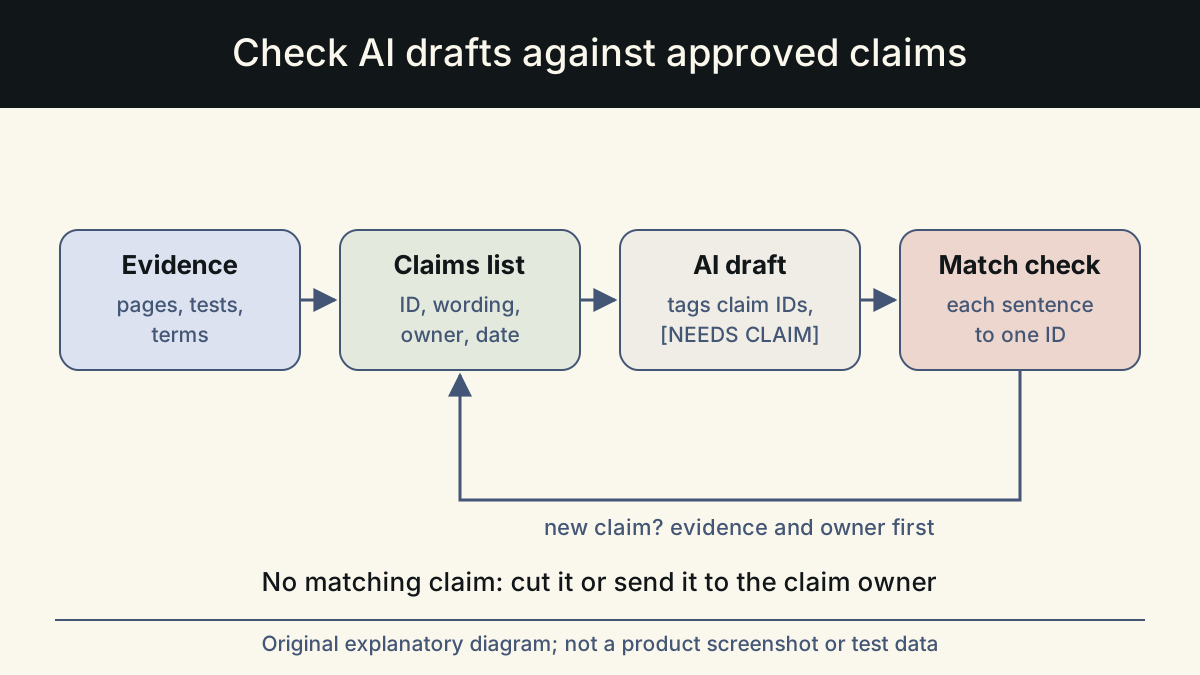
- One approved proof point: a fact about your product or a customer result that marketing or legal has cleared for use. If you do not have an approved number, use a plain description of what the product does. Do not let the model supply a statistic.
- One small ask: a question that is easy to answer, such as whether a short call next week is useful, or who owns the topic on their team. Asking for a 45-minute demo in a first email is a big ask from a stranger.
Write the brief, including what to leave out
Give the model the three inputs, the reader's role, and a length limit. For first-touch emails, about 75 to 125 words is a sensible target: long enough for one idea, short enough to read on a phone. Ask for three versions with different opening lines so you can choose, rather than one version you feel obliged to accept.
Then add a ban list. Models fall back on familiar sales phrases, and naming them is the quickest way to stop it. Start with these and add your own as you spot them:
- Openers: I hope this finds you well; I came across your profile; I wanted to reach out; quick question.
- Flattery: impressed by; love what you are doing; innovative; industry leader.
- Vague value: help you achieve your goals; take your business to the next level; streamline your workflow.
- Pressure: just following up; circling back; I have not heard back; limited time.
- Any number, customer name or result that is not in the approved proof point.
Subject line and first line
Nielsen Norman Group's guidance on email subject lines says to describe what the email covers in terms that matter to the reader. Lead with the key words, because long lines get cut off. Avoid generic subject lines that give the reader nothing to act on. For sales email, that means the subject should name the trigger or the topic, not the sender's product. "Your analytics engineer posting" tells the reader why this email is about them. "Introducing Acme Insights" does not.
The first line should be the trigger itself, stated as a fact, followed by why it matters to the reader. Skip the introduction of yourself. Your name and role are already in the signature.
The before and after below show how the inputs change the result. Both versions are illustrative, written for this article. The company names are invented.
Look at what changed. The first version has no trigger, a statistic nobody approved and a large ask. The second names a fact the reader can verify, describes what the product does without a number, and ends with a question that can be answered in one line.
Accuracy and compliance basics
AI drafting does not change your legal obligations. In the United States, the Federal Trade Commission (FTC) publishes a CAN-SPAM compliance guide for commercial email, including business-to-business messages. Its requirements include accurate header information and a subject line that reflects the content. Each message needs a valid physical postal address and a clear way to opt out, and opt-out requests must be honored within ten business days. The guide also states that hiring another company to send your email does not remove your responsibility. Other countries have their own rules, so check the ones that apply to the people you write to.
Deliverability rules matter too. Google's email sender guidelines set requirements for bulk senders to Gmail. They include domain authentication with SPF, DKIM and DMARC records, one-click unsubscribe for marketing messages, and a low spam rate in Postmaster Tools. An email that sounds human but is sent from a misconfigured domain will still struggle to reach the inbox.
Before sending, check each draft against this list:
- The trigger is true and current. You have opened the source today.
- Every claim about your product matches approved material. No invented statistics or customer names.
- The subject line describes the email honestly.
- None of the banned phrases slipped back in during editing.
- There is one ask, and it is easy to answer.
- Your template includes a postal address and a working opt-out where the law or your sending setup requires them.
Follow-ups and reusable inputs
Follow-ups should add something new: a second relevant fact, a short answer to a likely objection, or a different person who might own the topic. Ask the model for a follow-up that adds one new piece of information, and ban the phrases that only remind the reader they did not reply.
Over time, keep your approved proof points and ban list in one shared place, so every rep's brief starts from the same cleared material. Whalory is one way to do this. It is a writing workspace for professionals who write with AI. It offers task-specific forms for roles including sales, plus brand voice settings and a review step that keeps approved facts and removes invented claims. The examples in this article are illustrative, not customer results.
Sources
- CAN-SPAM Act: A Compliance Guide for Business (FTC)
Main requirements for commercial email: honest headers and subject lines, postal address, opt-out within ten business days, responsibility when using a vendor.
Checked: November 10, 2026
- Email sender guidelines (Gmail Help)
Bulk sender requirements: SPF, DKIM and DMARC, one-click unsubscribe, and spam rate limits in Postmaster Tools.
Checked: November 10, 2026
- Microcontent: How to Write Headlines, Page Titles, and Subject Lines (Nielsen Norman Group)
Subject lines should describe the content in the reader's terms, lead with key words and avoid generic wording.
Checked: November 10, 2026
This article was written and reviewed with AI assistance. The sources above are there for you to check. Weigh the advice against your own situation.
Try this method on your own writing
Spotted a mistake or something unclear? Report it on GitHub. The article name and the section are enough; do not put confidential details in a public report.