How to stop AI from inventing facts in marketing copy
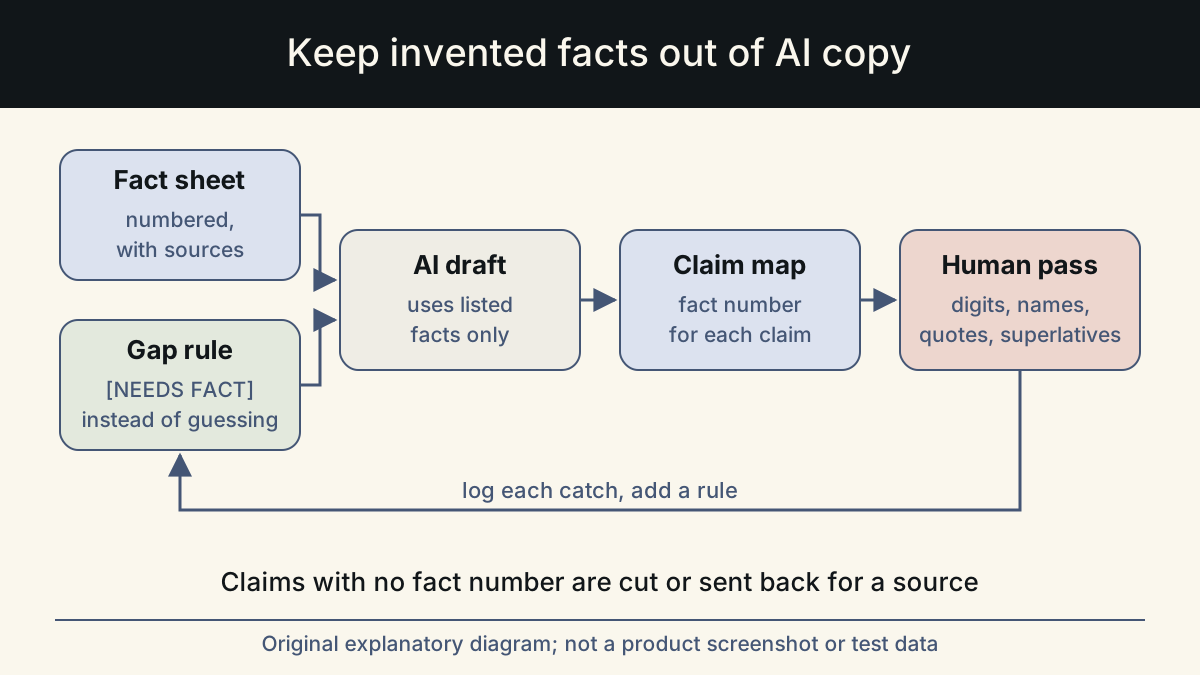
AI models fill gaps in a brief with details that sound right. A fact sheet, a rule for missing facts and a methodical review pass keep those details out of what you publish.
Read the article
Practical guides for professionals who write with AI, with examples, checklists and sources you can check yourself.
12 articles
AI models fill gaps in a brief with details that sound right. A fact sheet, a rule for missing facts and a methodical review pass keep those details out of what you publish.
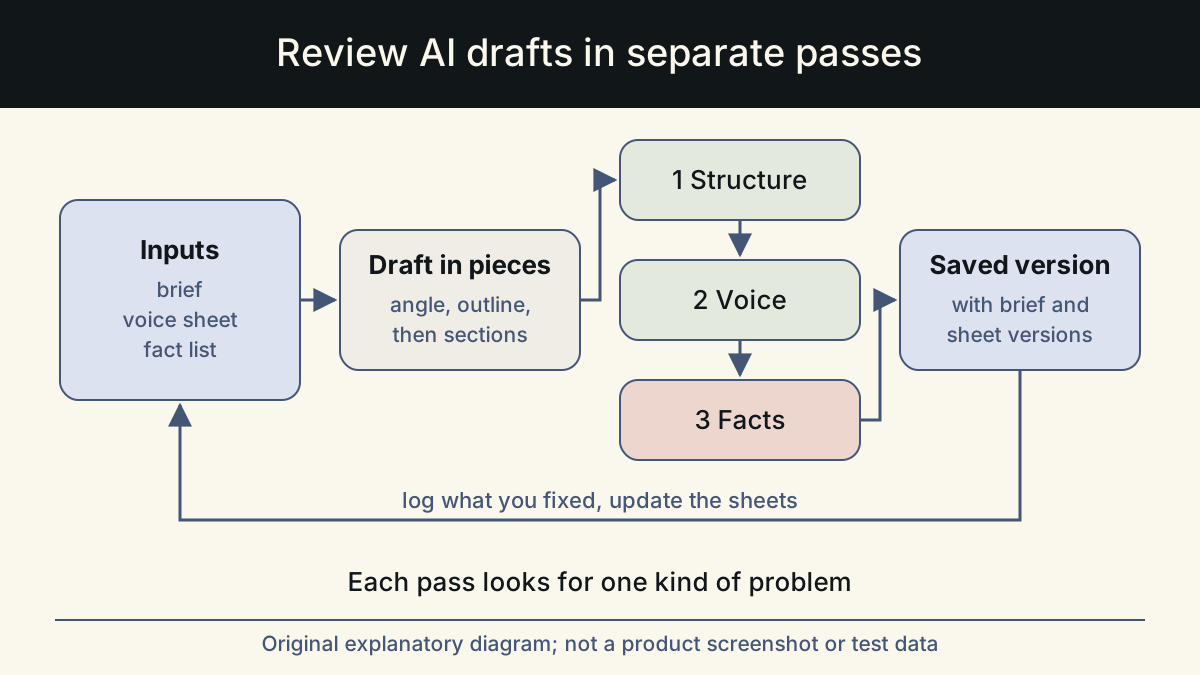
Read the articleWhen AI writes the first draft, the copywriter's main job moves to review. This workflow splits that review into passes you can repeat on every job.
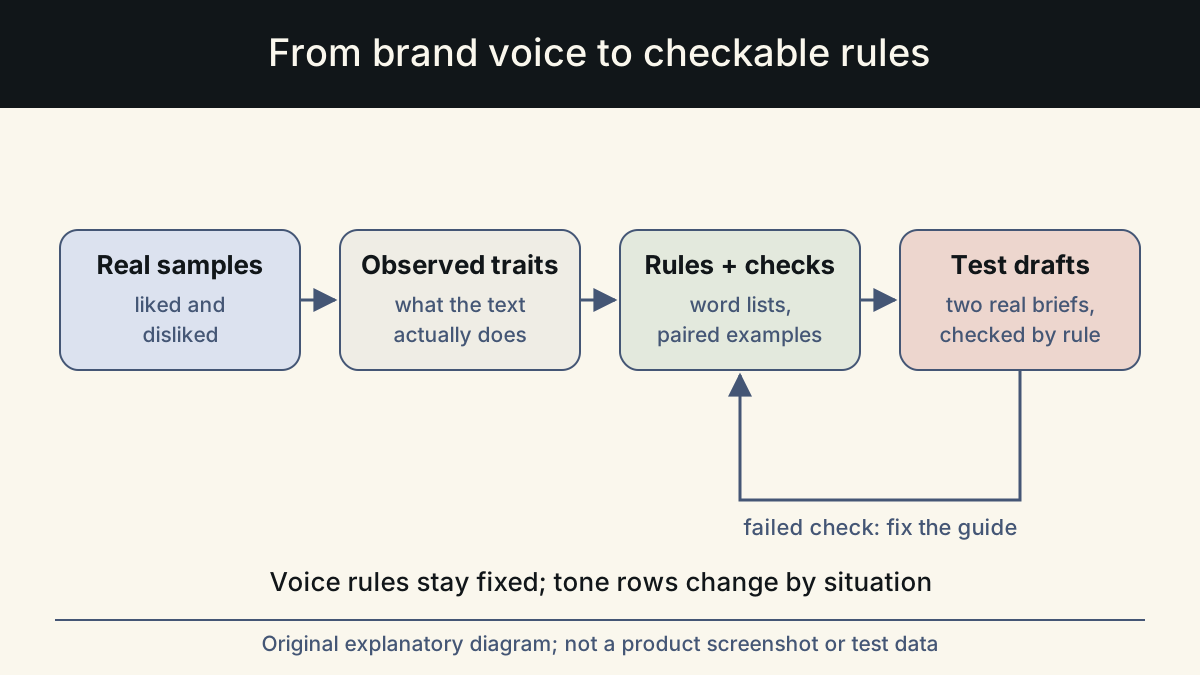
Read the article'Friendly but professional' gives a model almost nothing to work with. Rules, word lists and paired examples give it something to follow and you something to check.
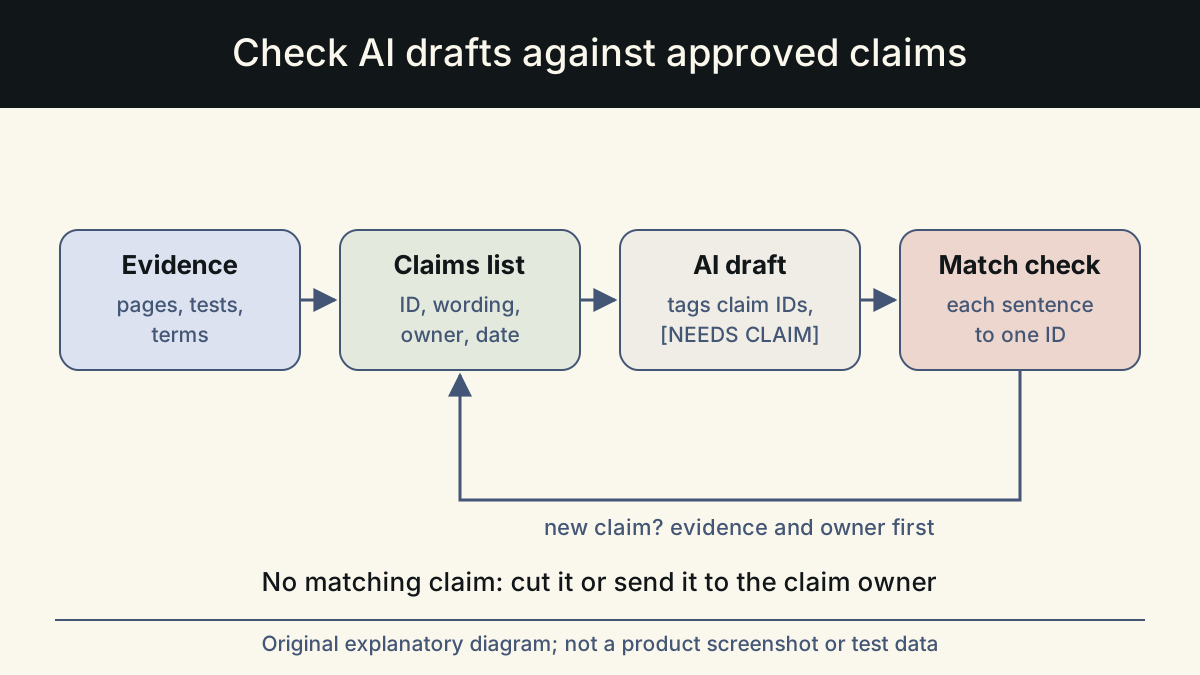
Read the articleAn approved-claims list records what you may say, in what words, on what evidence. With claim IDs, checking an AI draft becomes a matching exercise instead of a guess.
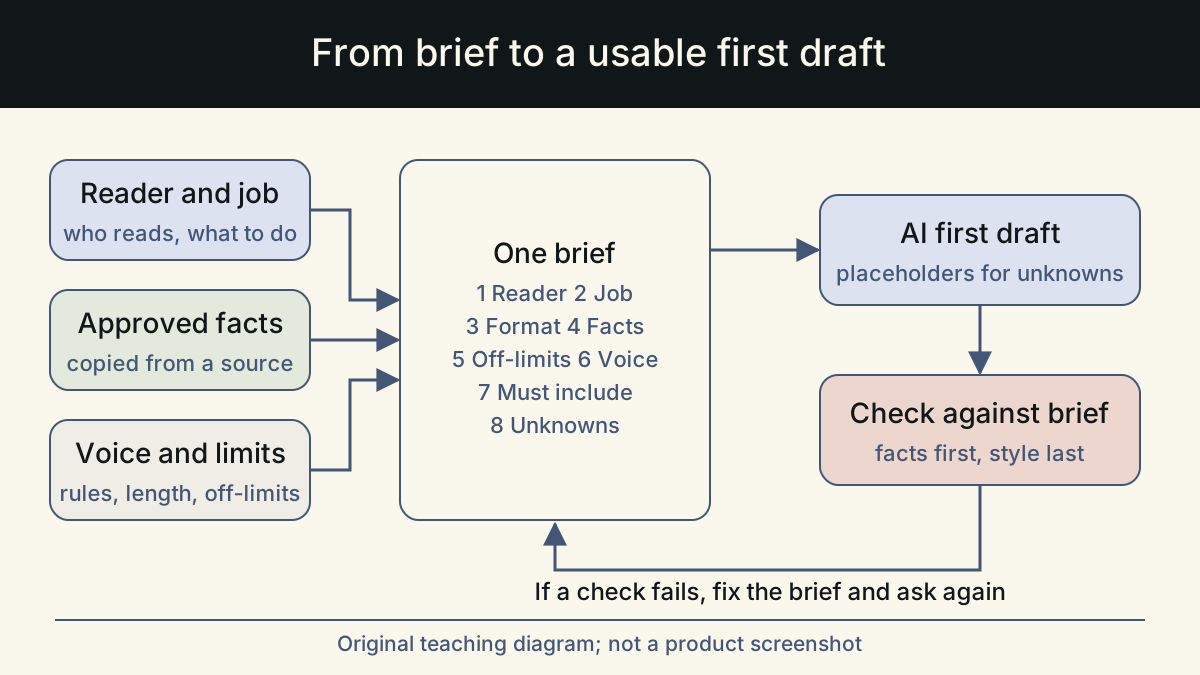
Read the articleMost weak AI drafts start with a one-line request. This eight-field brief gives the model what a new colleague would need, and gives you a fair way to judge the result.
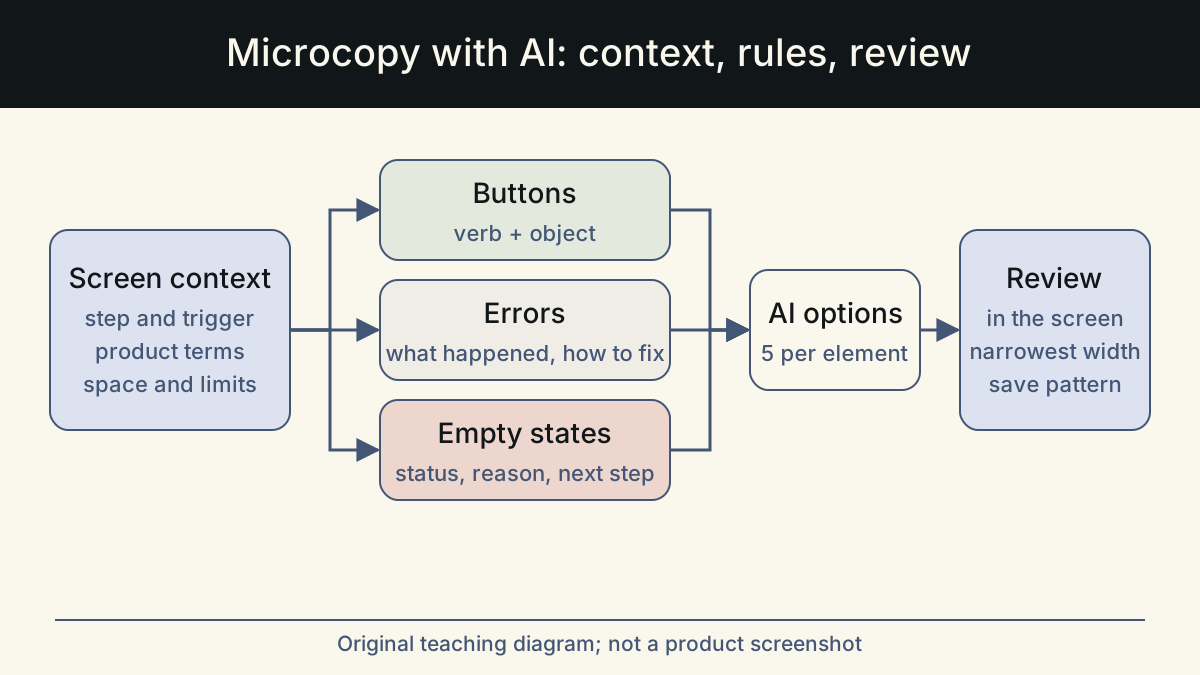
Read the articleAI can produce dozens of button labels and error messages in seconds, but most of them will be vague or cute. Give it the screen context and firm rules, and review in place.
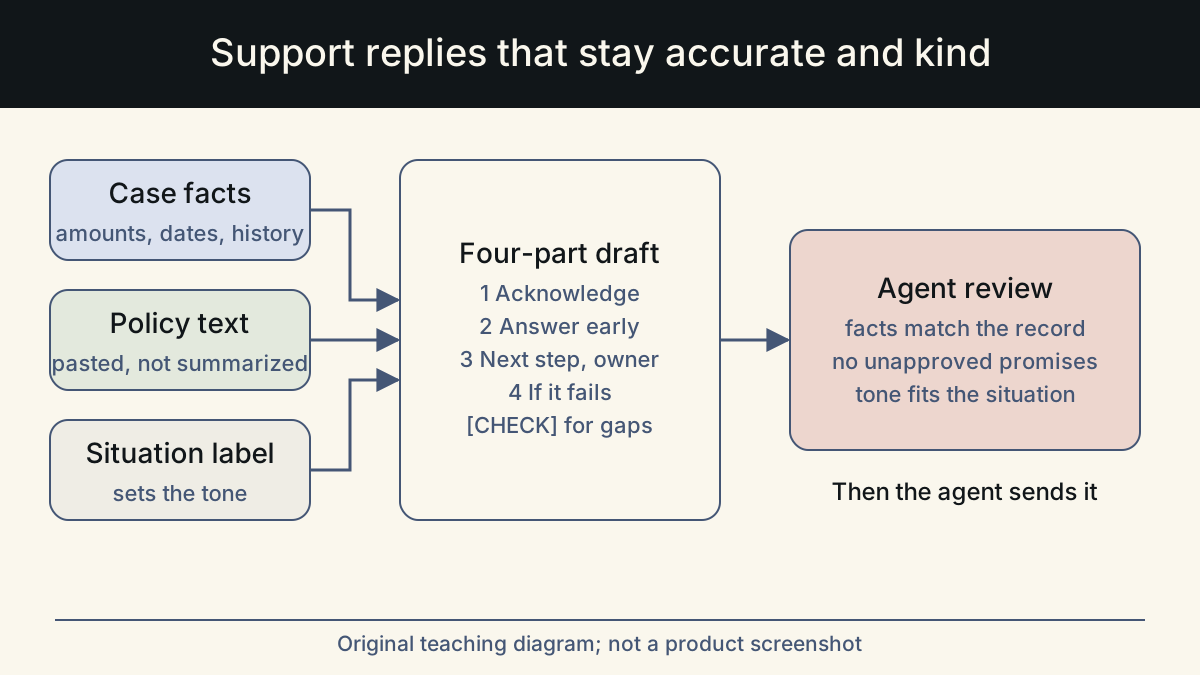
Read the articleAn AI support reply can be warm and still wrong. Ground every draft in the case and the policy, give it a fixed structure, and check the promises before you send.
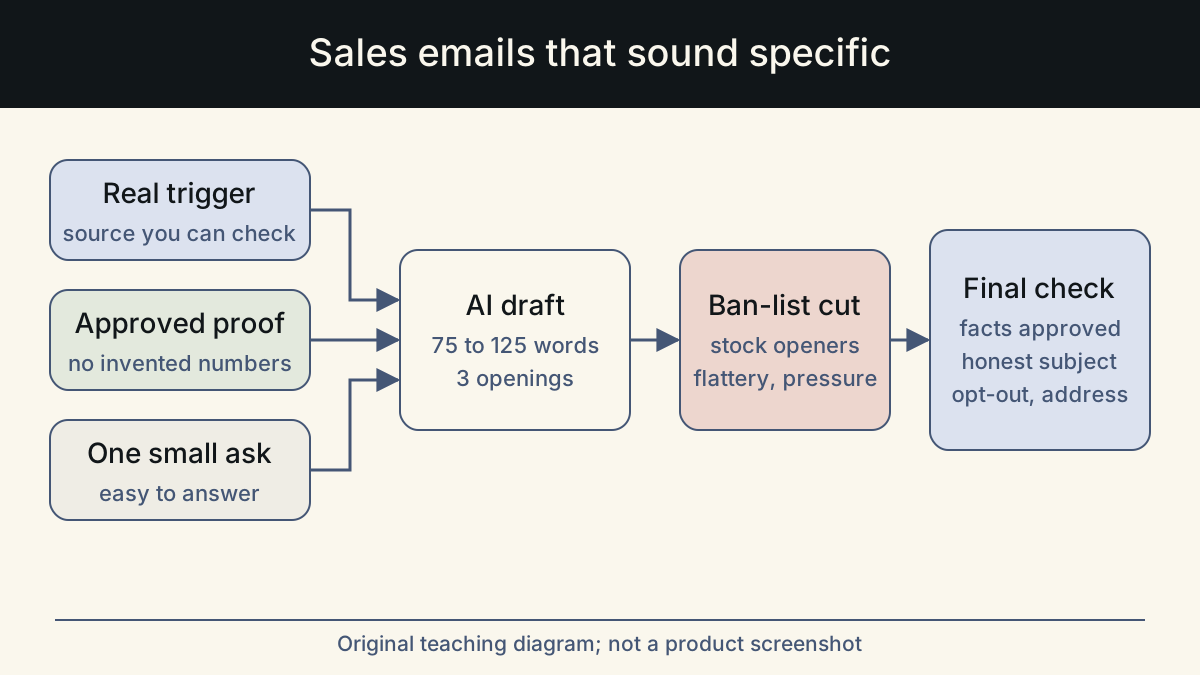
Read the articleGeneric AI sales emails come from generic inputs. Give the model a real trigger, a proof point you are allowed to use and one small ask, and cut the phrases every inbox has seen.
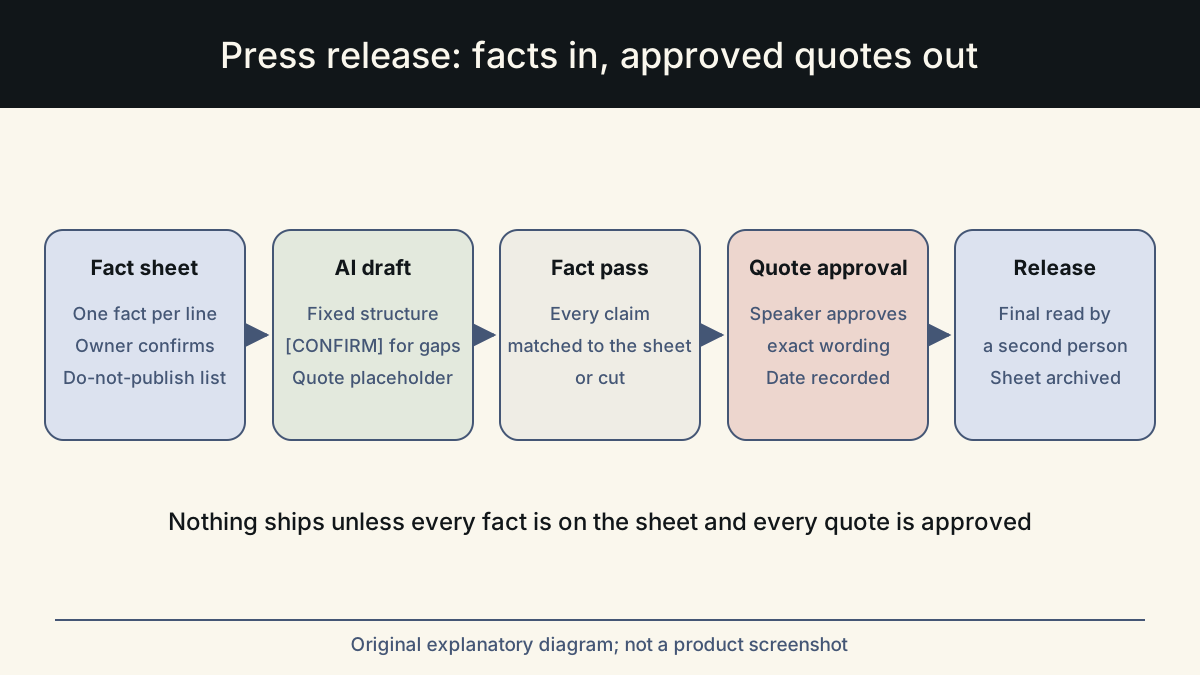
Read the articleAI can produce a clean press release in seconds, and that is the risk. This method keeps the draft tied to a fact sheet and keeps quotes in the hands of the people who said them.
Read the article